
The mistake almost everyone makes first
Here's what happens: moving day arrives, the truck is loaded, and someone hits the garage door opener to see if it works. The door goes up, the door goes down, everybody nods, and the garage gets crossed off the list. It's tempting to skip a real inspection because the door looks fine and there's furniture waiting. But "it opens and closes" tells you almost nothing about the springs, cables, rollers, or opener safety features underneath — and six months later, when a spring snaps or a panel starts rusting at the seams, that's exactly when the landlord-tenant argument starts, because nobody has any record of what the door looked like on day one.
The general rule of thumb (check your lease first)
Every lease is different, and nothing here replaces reading yours, but most rental agreements follow a similar logic:
- Landlords are usually responsible for normal wear and mechanical failure — a spring that finally gives out after years of cycles, an opener motor that dies of old age, rollers that wore smooth, or rust that formed because the door is original to the house.
- Tenants are usually responsible for damage caused by misuse — backing a car into the door, forcing a door that's stuck instead of reporting it, leaving the door open during a storm and letting wind-driven rain soak the opener, or ignoring a noise until it turns into a bigger failure.
- Gray areas almost always come down to documentation. If nobody can prove what the door looked like at move-in, disputes default to whoever has the better memory — which usually isn't the tenant.
This is the part worth reading out loud to whoever you're arguing with: the lease language matters more than instinct, but a solid move-in inspection protects both sides regardless of what the lease says.
What to actually inspect at move-in
A thorough garage door walkthrough takes fifteen minutes and saves hours of arguing later. Walk through this list together, phone in hand, taking photos and a short video of the door opening and closing.
Look at the hardware
- Check the springs (the coiled bar above the door, or two vertical ones on either side) for rust, gaps in the coil, or visible stretching.
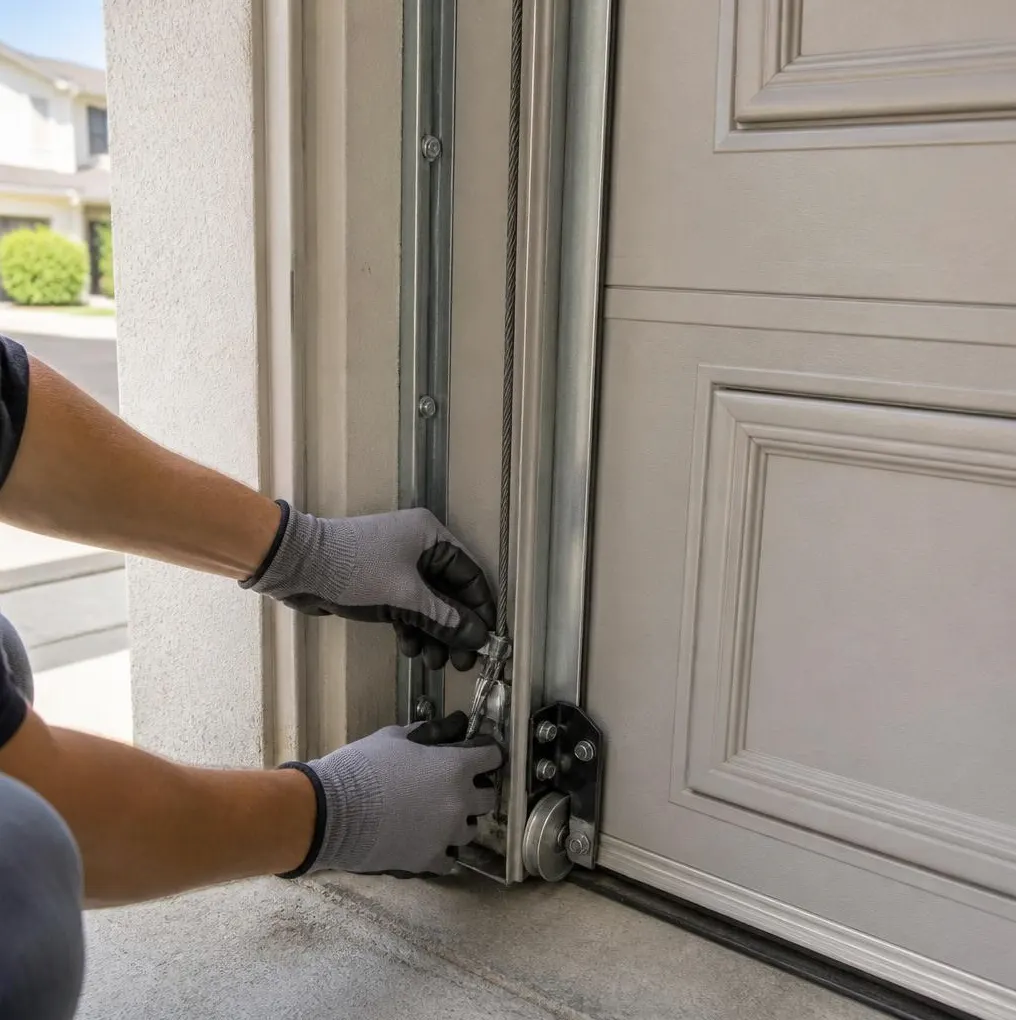
- Check the cables running down to the bottom brackets for fraying, kinks, or looseness.
- Run a hand along the tracks for rust, dents, or bends — humidity and afternoon downpours speed up corrosion on anything that isn't sealed or galvanized well.
Test the door itself
- Disconnect the opener and lift the door by hand halfway. It should stay roughly in place. If it crashes down or shoots up, the springs are out of balance — note it in writing before you ever touch the opener again.
- Watch the door travel through a full cycle. Off-track doors often look fine until they bind or wobble partway through.
- Press the wall button and a remote separately to confirm both work, and test the auto-reverse safety feature by placing a 2x4 flat on the ground where the door closes.
Check for storm and moisture damage
- Look at the bottom seal and weatherstripping — cracked or missing rubber lets water in during heavy rain and speeds up rust on the bottom panel.
- Check panels for soft spots, swelling, or bubbling paint, which usually means moisture has been sitting against the material.
- If the door has a wind-load rating sticker or plate (common on doors installed or replaced after hurricane-era code updates), photograph it. It matters for insurance and for knowing what the door is actually built to handle.
- Ask whether the opener has battery backup. Power outages during storm season aren't rare here, and a backup battery is the difference between opening the door manually in the dark and just opening it.
Why this matters more here than in a lot of places
Garage doors in this part of Florida work harder than the national average. Humidity keeps metal parts damp more often than not, salt air near the river and coast accelerates rust on springs and tracks faster than inland areas, and hurricane season puts real wind pressure on panels and tracks that weren't built or installed for it. A door that was fine when a tenant moved in during the dry season can show real wear by the next summer — not from misuse, just from the climate doing what it does. That's exactly why photos and a written inspection matter more here than in a drier, calmer climate: it separates "this failed because of age and weather" from "this failed because someone did something to it."
When documentation turns into a repair call
Once you've got your move-in records, the ongoing rule is simple: whoever notices a problem should report it in writing right away, with a date and a description, even if it seems minor. A door that's slow to close, a grinding noise, a remote that's gotten unreliable — small issues reported early are cheap. The same issues ignored for months tend to turn into a stuck door, a snapped cable, or a panel that needs full replacement instead of a patch, and that's when the "who pays for this" conversation gets heated.
When to call Welaka Garage Door Repair
If you're a landlord or tenant in Welaka, Palatka, Crescent City, Pomona Park, Satsuma, East Palatka, San Mateo, or Interlachen and you're not sure whether something is normal wear or damage, that's a good reason to call us before the argument escalates. We can do a full inspection, tell you honestly what's age and weather versus what's misuse, and handle whichever repair is needed — from a garage door spring repair on a door that's been bottoming out, to a full garage door tune-up and maintenance visit that documents the current condition of everything from tracks to cables. That visit alone can settle most disputes before they start.
If you need a garage door technician near Welaka, FL 32193 to inspect a rental before move-in or move-out, call Welaka Garage Door Repair — we're the local garage door company Putnam County residents turn to when they want an honest answer, not just a quick fix.